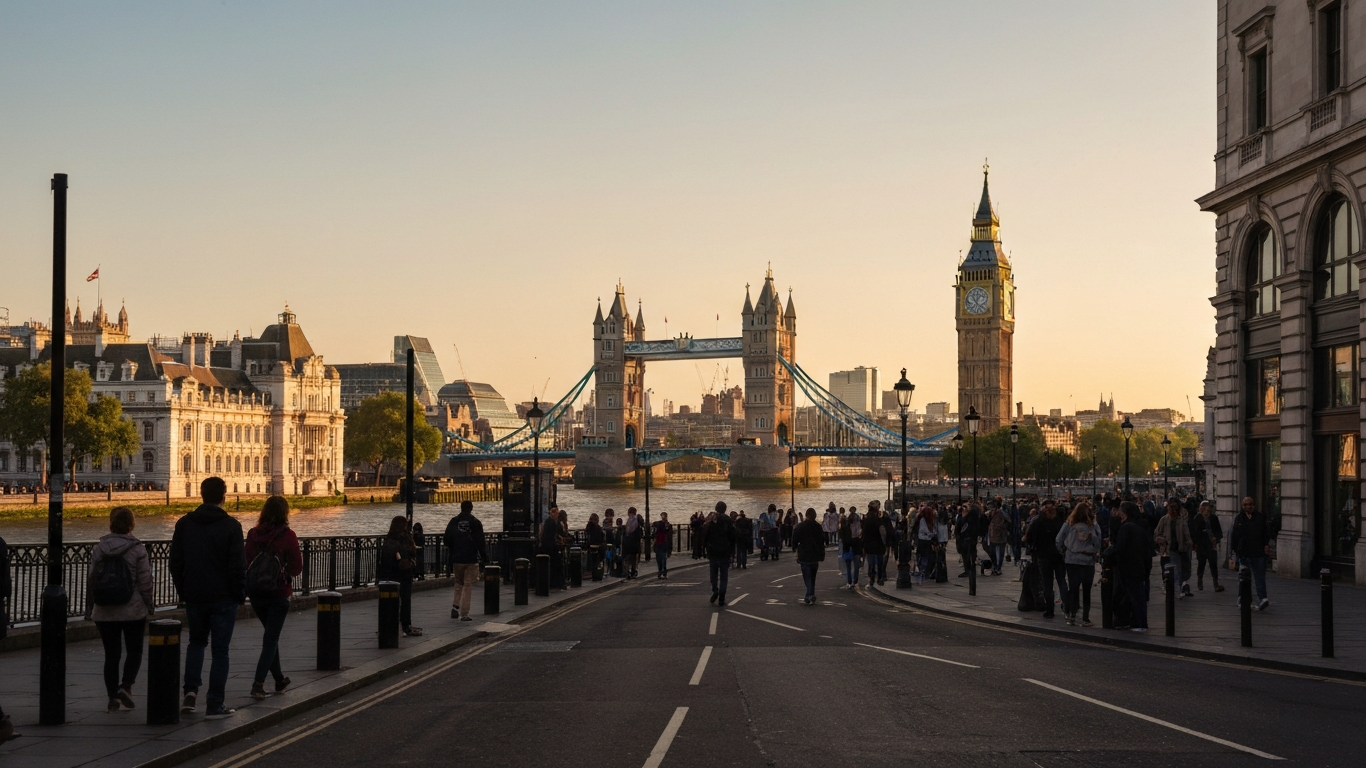
Day 1: Portland Stone and Gentle Fog
Begin the morning at The Wolseley on Piccadilly. The room is a study in marble and brass; pale veined counters catch a soft, diffused light and servers move with the hush of a drawing room. A pot of English breakfast tea arrives in bone china, followed by a measured plate — Isle of Purbeck back bacon, a free-range egg, charred tomato and a slice of black pudding — each texture set against crisp buttered sourdough. The light through tall windows has the cool, slate quality of an early London day; you feel the weight of wool coats and the faint tang of wood smoke on the air as locals step out onto Piccadilly.
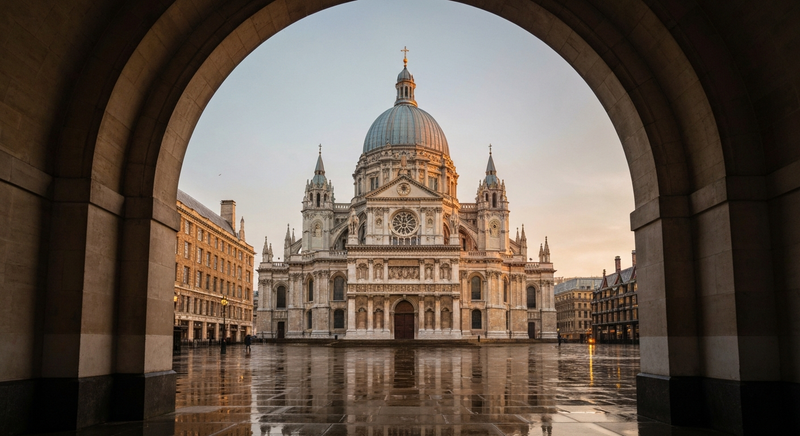
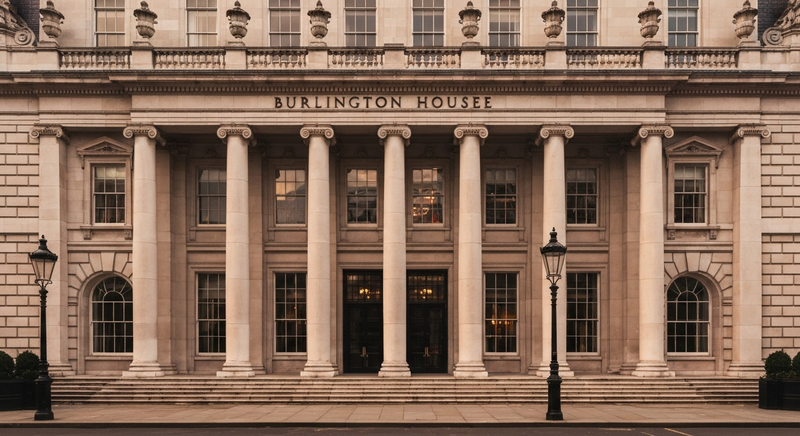
The walk along Burlington Arcade toward the Royal Academy is short and deliberate: polished shopfronts give way to the broad sweep of Burlington House, its columns of Portland stone softened by mist. For the transfer to the riverside galleries a taxi along the Embankment is sensible — the driver threads past the Strand and the Houses of Parliament, the Thames glinting through the gaps in the fog. Spend the afternoon at Tate Britain, where oak benches and low light make the galleries feel like an atelier; Turner's skies simmer with an inner light, and the hush of the rooms makes even small gestures feel intimate. Lunch in the atrium is a simple plate of smoked trout on rye with horseradish crème fraîche, the porcelain cool under your palm.
As evening closes, reserve a table at Core by Clare Smyth and let the dining room’s muted glazing and tailored linen create an atmosphere of quiet precision. Courses arrive with tactile contrasts — a slow-cooked lamb shoulder with pea purée, the meat glossy against a whisper of mint oil — and a bottle of mature Burgundy unfurls slowly. After dinner take a short taxi to Notting Hill and wander the stone-flagged lanes of Kensington Church Street: the terraces are lit by soft sodium lamps, the air brisk, your scarf drawn close against the night as the city exhales around you.
Day 2: Brick and River Glass
Begin the morning at Monmouth Coffee Company in Borough Market on Stoney Street. The market breathes in a more tactile register: oak stalls, braided hessian sacks of flour, and the sharp air of roasted beans. A hand-pulled espresso and a flaky croissant are eaten standing at a narrow wooden counter while the smell of hot mackerel and citrus from the smokehouse lingers. From here, the timber ribs of Shakespeare's Globe sit just along the embankment — a study in oak and suspended shadow; the rebuilt frame throws calm, geometric shadows on the ground when the sun breaks through.
The walk along the South Bank to Tate Modern is an exercise in measured views: the Thames slides by, barges leaving a faint mineral tang, the Millennium Bridge’s steel lines framing St. Paul's in the distance. Across the bridge the Turbine Hall's industrial concrete and exposed steel feel almost monastic; gallery lighting sculpts artworks into planes of silence. Its scale encourages quiet reflection rather than outright silence, and benches invite long pauses. Lunch at the museum café is modest and exact — salt cod on blistered sourdough with tender peas — the plate cooling against your wool sleeve.
For evening, book a window at Oblix in The Shard and arrive as the city shifts into glass and lamplight. The dining room is glass-walled, the river reduced to a band of reflected gold; table linens are white, the chairs upholstered in midnight velvet, and the sommelier offers a taut Bordeaux to pair with a salt-aged ribeye or a seared turbot in brown-butter sauce. After dinner walk back along the illuminated South Bank — the river carries a faint river tang and the air smells of wet stone, streetlamps creating a ribbon of warm light — your scarf drawn close as the city quiets into the night.