Day 1: Marble and Pale Light
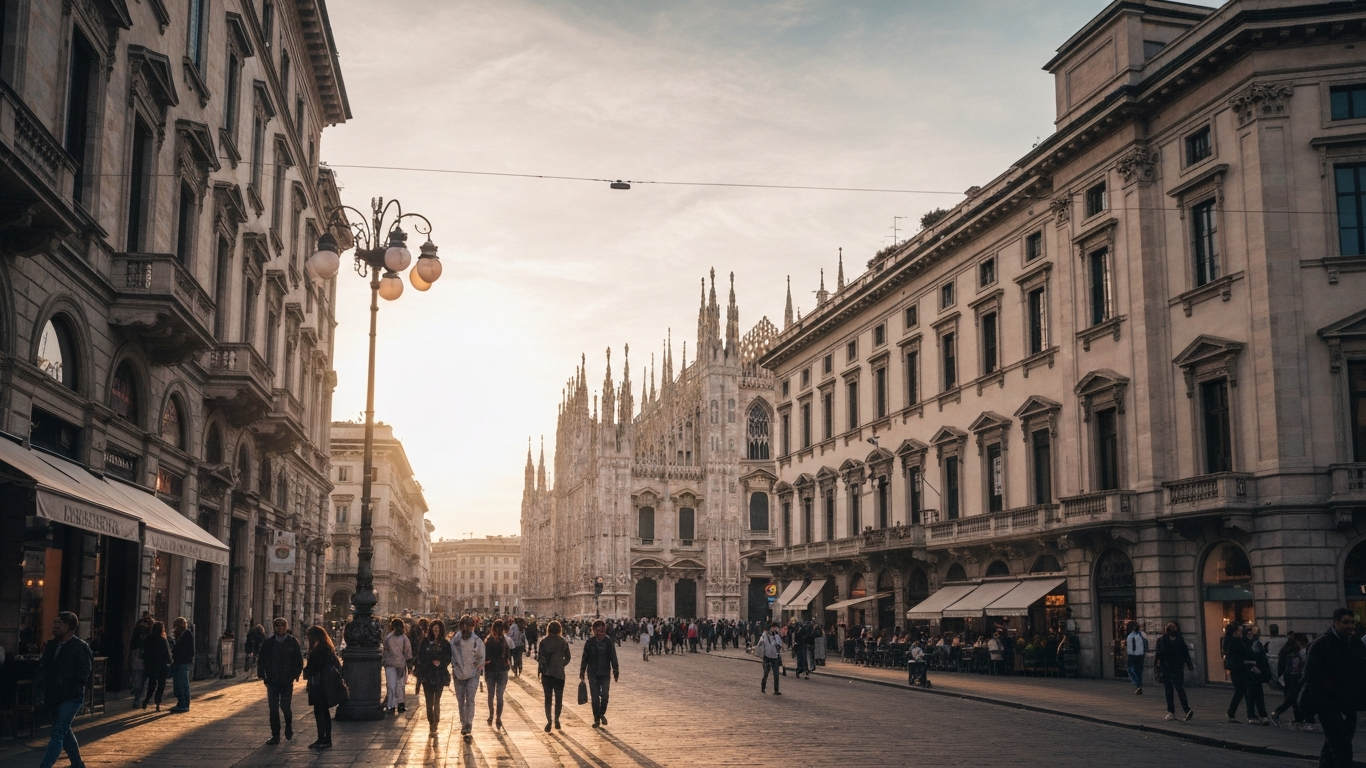
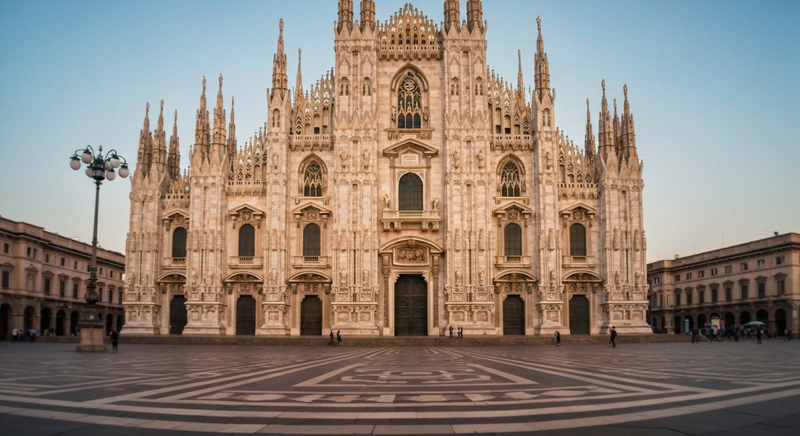
Begin the morning at Giacomo Caffè on Piazza del Duomo. The square’s light at mid-morning skims the marble façade; the cathedral’s carved surfaces hold a cold, chalky brightness while the café’s espresso sends up a thin ribbon of crema and steam. The pavement’s terrazzo and mosaic hold heat slowly, so the acoustics are hushed — footsteps and distant traffic softened by stone. Order a single ristretto and a plain brioche; the sweetness balances the faint metallic air of a working city. Fingers find a wool overcoat pocket for a folded map, and the café’s warm wooden counter collects the first fingerprints of the day.
Walk through the Galleria Vittorio Emanuele II, its glass vault turning pale light into a mosaic of reflections as you pass from piazza to Via Montenapoleone. The walk is under cover of ornate iron and glass, then spills onto streets of shopfronts whose brass handles are cool to the touch. For the afternoon, visit the Pinacoteca di Brera — a compact collection where polished parquet floors and heavy frames make the rooms feel crystalline and private. The air here smells faintly of old paper and linseed; conversations are low, almost reverent. If you prefer a contemporary counterpoint, stroll to nearby galleries on Via Brera, where concrete and exposed beams meet canvases hung with deliberate restraint.
As evening falls, dine at 10_11 inside Portrait Milano in the Quadrilatero. The dining room is a study in matte surfaces: velvet banquettes, warm timber tabletops, and low light that softens faces into silhouettes. Begin with a saffron risotto — the rice grains glossy against a plate like small suns — followed by ossobuco, the cut slow-braised until the marrow is soft and richly flavoured. Wines are chosen with an archivist’s patience; a Nebbiolo’s tannins cut through the dish and leave a mineral aftertaste. After dinner, walk past the illuminated façade of Teatro alla Scala; the night air carries the cool metallic scent of the city and the cadence of distant traffic, perfect for a quiet, reflective stroll back to your lodgings.
Day 2: Oak and Canal Reflections
Begin the morning at Panificio Davide Longoni. It’s a short taxi from central Milan (about 10–15 minutes), which helps the city’s scale settle as you travel. Inside, the counter is a disciplined run of cool concrete and neatly stacked timber shelves. The air smells of toasted flour and slow-turned butter; bite into a still-warm pane integrale or a butter-rich brioche and feel the crumb yield like memory. The oven’s heat gives the room a dry warmth; flour dust hangs in thin motes in the early light. Acoustic reverberation is minimal — the only rhythms are the scrape of a peel and the soft thud of loaves landing on wood.
From the bakery, take a taxi south toward the Navigli; the route crosses partial ring roads and urban gardens, a 15–25 minute transfer that feels like shifting scenes. Arrive at Erba Brusca on Alzaia Naviglio Pavese for a long, leisurely lunch. The restaurant’s structure stitches concrete slab and glass with planted beds; tabletops are raw timber, plates warm to the touch. Dishes are seasonal and vegetal — charred greens, roasted roots, and a restrained risotto where a single herb or blossom dominates. The air carries a faint river scent, metallic and cool; acoustics here are intimate, voices leaning into one another rather than thrown out.
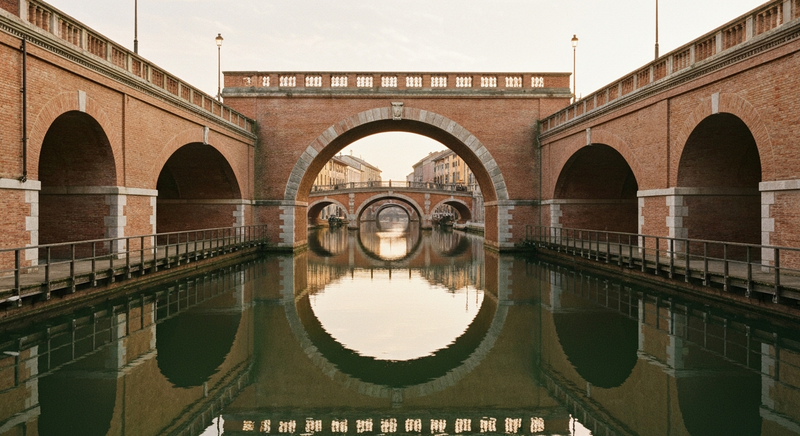
As dusk deepens, head to Officina in the Fonderie Milanesi compound for a late cocktail. The bar sits in a converted industrial shell: brick walls, high windows, and a bar backlit in amber. Order a vermouth-forward pour or an amaro with a flamed orange peel; the drinks arrive in thick-bottomed glasses that warm in the hand. The canal’s surface, seen on the walk back, reflects scattered sodium light and the silhouette of bridge arches; the night’s air is cool and slightly sweet with the memory of nearby chestnut trees. It’s a place to move slowly, to notice the grain of the wood and the low hum of the city at rest.